
A Day in the Life of Offshore Wind PPE – From Dispatch to the Turbine
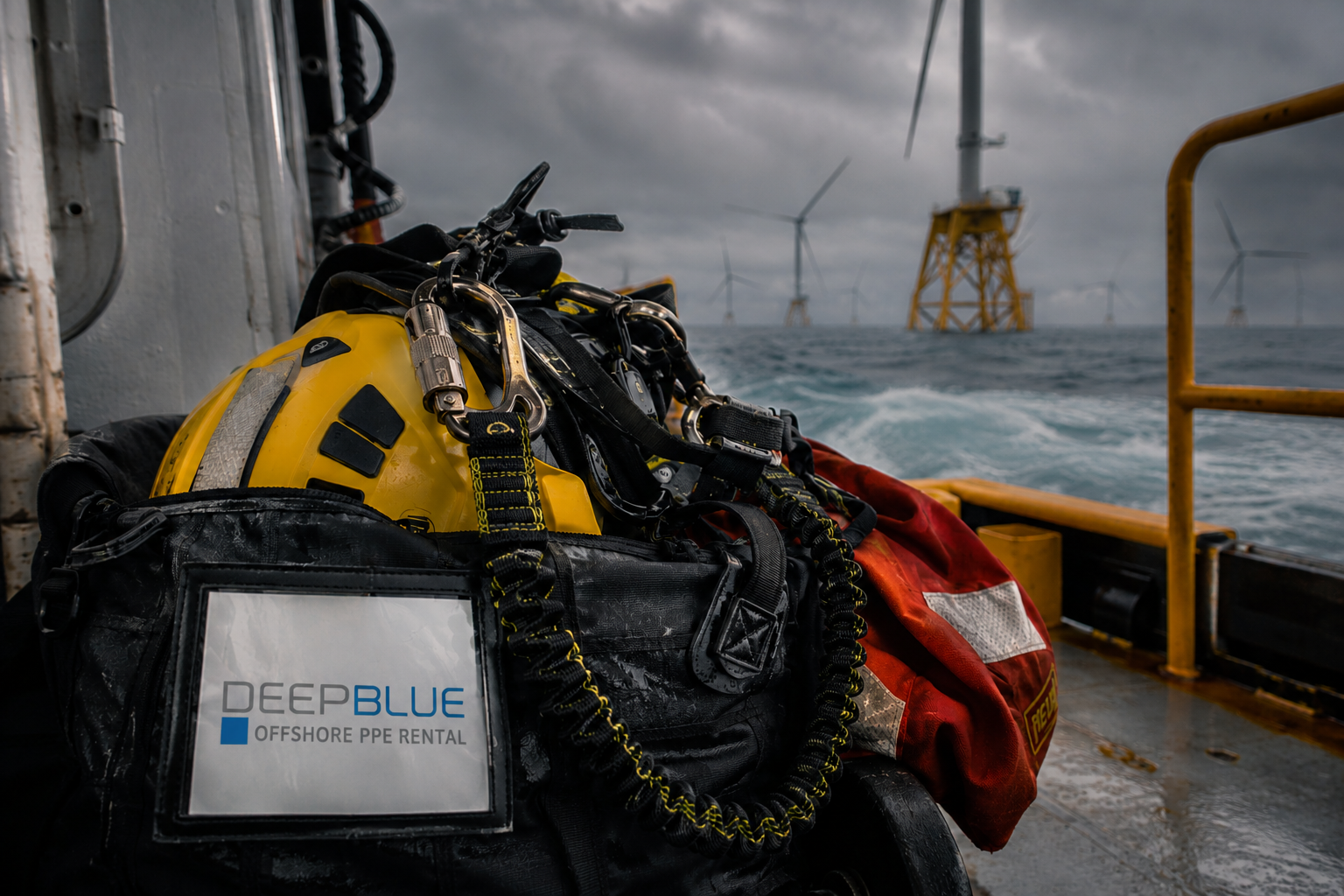
From our warehouse in Edinburgh to the top of a wind turbine
Every week, thousands of pieces of personal protective equipment (PPE) make the journey from warehouses across the UK to offshore wind farms. By the time that equipment returns, it may have travelled hundreds of miles, endured harsh weather conditions and helped keep technicians safe whilst carrying out critical maintenance.
At Deep Blue, we believe that understanding what offshore PPE experiences helps explain why quality equipment, thorough inspections and regular servicing are so important.
Here's a look at what a typical set of offshore PPE goes through.
Day One – Preparing for Dispatch
Everything starts long before a technician steps offshore.
Each harness, immersion suit and lifejacket is carefully inspected to ensure it is clean, fully compliant and ready for use. Documentation is checked, inspection records are updated and equipment is packed ready for dispatch.
For many contractors, this preparation is one less thing to worry about when mobilising for a project.
Travelling to Port
The equipment is collected by courier and transported to the mobilisation port, technicians home or office.
Depending on the project, this could be Aberdeen, Grimsby, Hull, Great Yarmouth, Lowestoft or ports across Europe.
Often, technicians arrive the evening before departure, collecting their equipment before heading offshore the following morning.
Boarding the Crew Transfer Vessel
Before sunrise, technicians board either a Crew Transfer Vessel (CTV) or a Service Operations Vessel (SOV).
Even before arriving at the turbines, the PPE is already being put to work.
Harnesses, lifejackets and immersion suits are worn during transfers, with equipment exposed to sea spray, rain, diesel fumes and constantly changing temperatures.
Offshore Operations Begin
Once offshore, the real work starts.
Technicians may spend 10–12 hours carrying out inspections, blade repairs, mechanical maintenance or electrical work.
Their PPE is constantly exposed to:
Salt water
UV sunlight
Rain
Wind
Fibreglass dust
Hydraulic oils
Grease
Abrasion from climbing and rope access
Repeated loading and movement
Every day offshore places significant demands on safety equipment.
Climbing the Turbine
Accessing the turbine is only the beginning.
Technicians climb internal ladders, move between platforms and, in many cases, work at significant height.
Harnesses support repeated movements throughout the day while connectors, lanyards and attachment points are constantly used.
For blade specialists working on rope access, the demands increase further, with equipment supporting technicians throughout lengthy descents and ascents.
Weather Never Takes a Day Off
Unlike many working environments, offshore weather changes constantly.
A technician may experience:
Bright sunshine
Heavy rain
Sea spray
Strong winds
Low temperatures
High humidity
The equipment has to perform reliably regardless of the conditions.
Returning to Shore
After completing a rotation, the PPE makes the journey back to the warehouse.
This isn't simply a case of putting it back on the shelf.
Every item is cleaned, inspected and checked for signs of wear or damage.
Components showing excessive wear are removed from service, ensuring the next user receives equipment in the same condition expected on day one.
Ready for the Next Project
The cycle then begins again.
From warehouse to wind farm and back again, every piece of PPE is relied upon to perform in some of the most demanding working environments in the world.
That's why inspection, maintenance and traceability remain at the heart of everything we do.
Whether you're mobilising a single technician or an entire offshore campaign, knowing your equipment is ready allows you to focus on the job ahead.
About Deep Blue
At Deep Blue Offshore PPE Rental, our experience extends beyond supplying equipment.
Our team continues to work within the offshore wind industry, giving us first-hand insight into the environments our equipment is used in and the standards our customers expect.
That practical experience shapes how we inspect, maintain and prepare every item that leaves our warehouse.